
Early abandonment
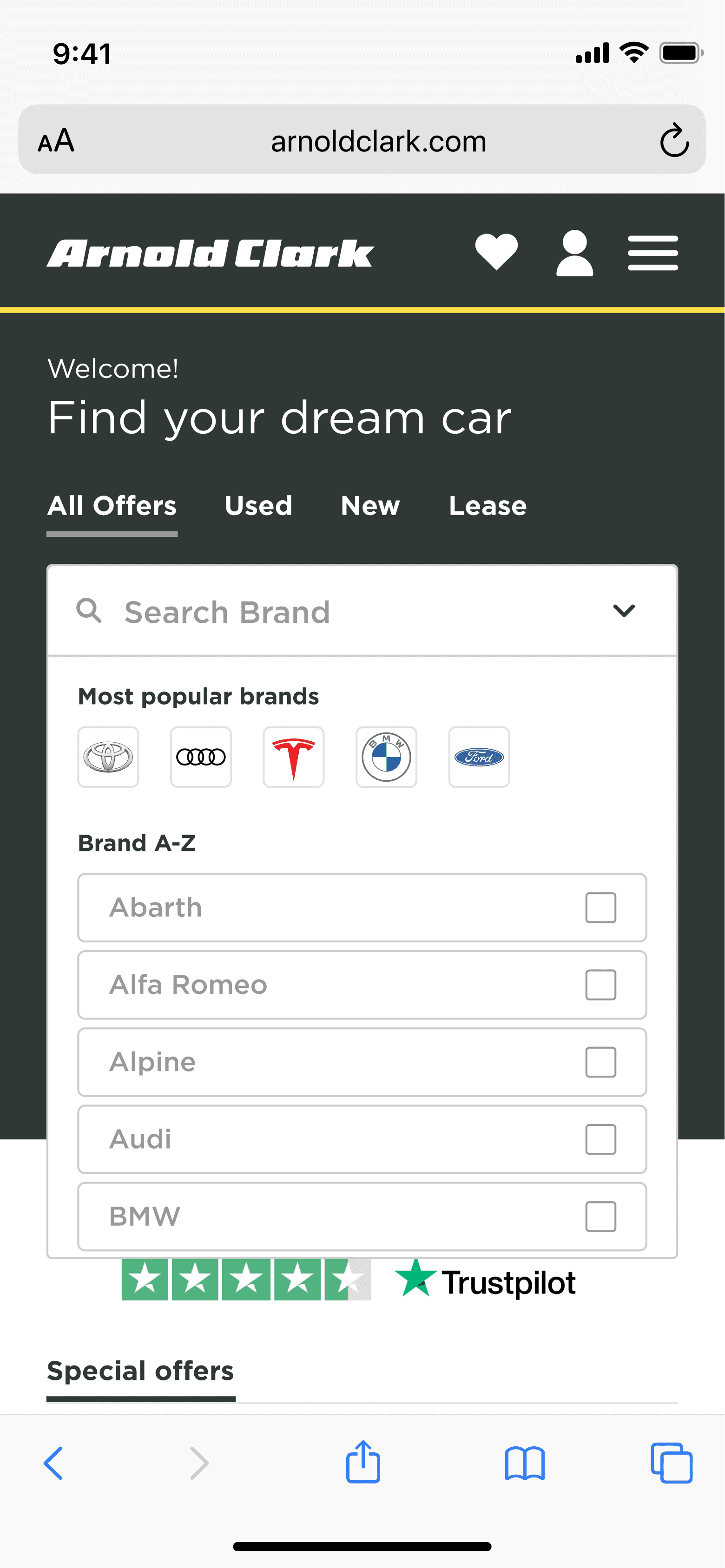
Requiring users to complete detailed filters before seeing results increased friction at the first decision point and led to higher drop-out.
Missed intent signals
Rigid filters failed to capture how people naturally describe what they are looking for, particularly when intent was broad or uncertain.
Underused homepage entry point
The homepage prioritised marketing content and social proof, leaving limited space for a clear and efficient first interaction.
Brief insights
The challenge brief highlighted friction in the existing search experience, particularly for users who wanted to browse quickly without committing to detailed filters.
Known search patterns
Common search behaviours show that users often start with broad intent and refine once they see available options.
Interaction heuristics
Language-first input is widely used in modern search experiences to reduce early friction and support exploration.
Filter-first interaction
Users were required to make detailed decisions before seeing any results.
Rigid search structure
The experience prioritised system logic over human language and intent.
Delayed sense of value
Results were hidden behind effort, reducing motivation to continue.
Time-boxed exploration
Concept developed within a 24-hour challenge.
Existing search logic
No assumptions about changes to inventory or backend systems.
Homepage constraint
The solution had to live within the existing homepage search area on mobile.
Focus on key browsing inputs
The homepage surfaced brand, model, and price as the primary filters for quick exploration.
Reduced early complexity
Advanced technical filters were removed from the first interaction to lower cognitive load for casual buyers.
Depth preserved for expert users
The existing advanced search was retained as a secondary option for users who wanted greater control.

VALIDATION
Aligned with the brief
The concept directly addressed the brief’s goal of reducing friction at the first interaction with search.
Consistent with known behaviour
The approach reflected common search patterns where users start broad and refine once they see available options.
Internally coherent
The solution was reviewed for logical consistency, ensuring it reduced complexity without removing advanced capability.
— Design Manager at Arnold Clark